
In collaboration with LUT University and LAB University of Applied Sciences
If you have ever thought about studying in Finland, you have probably already seen the glorious northern lights photos and read that Finland is the happiest country in the world. But what you really want to know is the practical stuff nobody puts in the brochure.
How much does it actually cost to live here? Can you find a part-time job without speaking Finnish? And how many hours are people working while studying full-time?
I get these questions in my DMs every single day. So I teamed up with the schools of my hometown: LUT University and LAB University of Applied Sciences to give you the most honest and practical breakdown I can.
Let’s get into it.

First: What Are LAB and LUT?
LAB University of Applied Sciences and LUT University are part of the same university group. They share modern green campuses in two cities: Lahti (my hometown – only an hour from Helsinki by train) and Lappeenranta (two hours from Helsinki, right next to the stunning Lake Saimaa!).
LAB focuses on practical education in areas like business, design, health care, engineering, and tourism. LUT is known for technology, business, and social science and it’s ranked among the world’s top 300 universities.
Together, they offer a study environment where you are not just sitting in lecture halls. You are working on real projects with real companies.
How Much Does It Cost to Live in Finland as a Student?
This is the question I get most. The good news is that Lahti and Lappeenranta are two of the most affordable student cities in Finland. Here is what your money actually goes on:
Rent
This is your biggest monthly cost. Both cities are much more affordable than Helsinki.
Lappeenranta
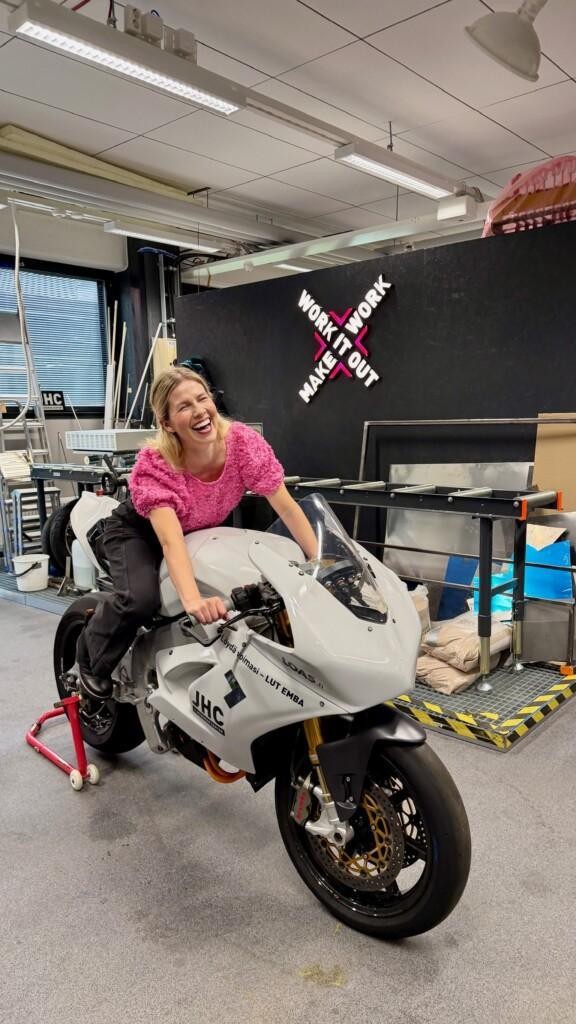
In Lappeenranta, I recommend finding housing through LOAS (Lappeenranta Student Housing Foundation). The rent always includes internet and it may also include electricity, and water. Buildings also have free sauna and laundry room access. You don’t have to pay a rent guarantee which you always have to pay when you have a private landlord.
- Room in a shared apartment: around 280€–370€ per month
- Studio apartment: around 410€ per month
- One-bedroom apartment: around 570€ per month
Lahti
In 2026, Lahti was ranked 5th best student city in Finland, with top marks for housing supply and job opportunities, by the way.
Student housing in Lahti is managed by Lahden Talot. The rent always includes the internet and may also include electricity and even water. Buildings also have a free laundry room and sauna. Again, when your home is through student housing, you don’t have to pay a rent guarantee which you always have to pay when you have a private landlord.
- Room in a shared apartment: around 350€ per month
- Studio apartment: around 500€ per month
- One-bedroom apartment: around 600€ per month
In conclusion, when you’re looking for an apartment in Finland and see a rent price, always check what is included. Here are the things to ask about:
- Electricity
- Water
- Internet
- Home insurance
- Sauna and laundry options
Finnish apartments always come with a fridge-freezer, stove, and built-in cabinets. For everything else, online marketplaces like Facebook Marketplace and Tori.fi are full of people selling old furniture very cheaply or even giving it away for free. It is completely possible to furnish your whole apartment without spending much at all.
With student housing, you can stay at the same address for the whole duration of your studies. This is awesome compared to the private market where the landlord can terminate your contract if for example, they want to sell the apartment.

Food
As a registered student, you get super affordable lunches on campus for just 2.95€. For reference, a lunch in a normal restaurant is around 13,90€. I cannot praise the campus lunches enough! That is a full, warm, nutritious meal. Different dietary needs are well catered for, so whether you are vegetarian, vegan, or have other requirements, you will find options. If you eat on campus every weekday, that is around 60€ per month on lunches. A very good deal which I loved as a student.
For groceries, a basic weekly shop (bread, cheese, yoghurt, some vegetables, rice/pasta/potatoes, chicken, and toilet paper) costs roughly 20€. You are not living like a king, but you are absolutely not going hungry.
Transport
Students get discounts on bus and train tickets, and regional buses. A train ticket from Lahti to Helsinki (or Helsinki airport!) is only 7,05€ for students with a local train. For Lappeenranta it’s around 20 euros with the most affordable option. Also, in cities like Lahti and Lappeenranta, many students get around just fine by bike and walking too!
Other Monthly Costs
- Mobile phone subscription: around 20€–30€ per month
- Student health care fee: 35.60€ per term (not per month). This covers the Finnish Student Health Service, which includes general, mental, and dental health care.
- Sports and gym: 30€ per semester through the student sports service MOVEO. This was fantastic as a student, because this covers all gyms but also badminton and other ball games + group activities!
What Does a Realistic Minimal Monthly Budget Look Like?
This chart below is my personal calculations for you:
| What you spend on | Lappeenranta | Lahti |
| Shared room rent (utilities included) | around 320-420€ | around 350-450€ |
| Campus lunches (20 days) | 59€ | 59€ |
| Groceries | 150-200€ | 150-200€ |
| Transport | 50€ | 50€ |
| Phone subscription | 20–30€ | 20€–30€ |
| Personal spending | 200€ | 200€ |
| Total estimate | around 810-910€ | around 840-940€ |
The official recommendation by the universities is to budget 900-1200 euros per month.
Student Health Care: One of Finland’s Best-Kept Secrets
I have to talk about this because it is genuinely incredible, and most people do not realize how much it saves you.
For 35.60€ per term (not per month, per term!), you have access to the Finnish Student Health Service. This covers general health care, mental health services, and dental care.
I have personally had my wisdom teeth removed in surgery through this service. It was affordable and the quality was excellent. That kind of procedure would cost hundreds or even thousands of euros in many other countries. Also subscriptions to birth control etc. are easily coordinated with this service.
Can You Survive in Finland Without Speaking Finnish?
Short answer: yes, absolutely. Longer answer: The more Finnish you speak, the more opportunities you’ll get in Finland.
All the degree programmes at LAB and LUT taught to international students are fully in English. You will never be in a classroom where you cannot follow what is going on because of the language.
In everyday life, most Finns speak English and they speak it well. Finland is one of the top countries in the world for English skills. If a Finn seems a bit shy about speaking English with you, it is usually shyness, not lack of ability.
Finnish and Getting a Job
Here is the honest truth: knowing Finnish is a real advantage when looking for work, especially part-time. Many jobs in shops, cafes and restaurants require at least some basic Finnish.
That said, there are jobs where you can get by in English:
- International company settings
- IT and tech
- Tourism and hospitality
- Campus jobs like tutoring or student association work
- Some cleaning, logistics, and factory work where language matters less
Both LUT and LAB include Finnish language courses in all its programmes, so you start building skills from your very first semester. Finns understand their language is hard to learn. They appreciate effort, not perfection. Tervetuloa!
How Hard Is It to Get a Part-Time Job in Finland?
This is one of the most common questions I get. The honest answer is: it takes effort, but it is possible.
Finland’s job market is competitive, and it takes some time to find your footing. But student cities like Lahti and Lappeenranta have active local economies.
What Helps You Find a Job
- Start early and network from day one. Do not wait until you urgently need money. From the very first day on campus, start asking other students if they are working and where. Ask everyone, and I do mean everyone. Ask them to let you know if any positions open up. And then take it one step further: contact that workplace yourself. Tell them your friend (name drop them!) loves working there, and that you want to introduce yourself because you think you would be a great asset to the team, and here is why. Most jobs in Finland are filled through personal networks, not online applications. You need to do this, not just send your CV into the void.
- Visit every job and industry fair you can. It is worth the trip even if it is in another city. In Lahti and Lappeenranta there are student fairs where employers come specifically to recruit. But beyond those, every field has its own industry events. For example, if you are studying engineering, the biggest fair to know is Alihankintamessut in Tampere. It’s not only students there, it’s literally everyone, also executives, especially on the weekday fair days. You absolutely want to go there when you are job hunting and building your network. To find the right events for your field, ask your Finnish teachers. They will know.
- When you go to a fair, go in with a goal. My personal target was 20 conversations per day. After each conversation, I asked to connect on LinkedIn and sent a personalised message thanking them for the chat. You build your network before you need it. One of my favourite sayings is: closed mouths don’t get fed. Be openly looking, openly asking, and the opportunities will come.
- Knowing some Finnish: even a basic level opens more doors but that being said, there are so many opportunities in English too.
- The work placement built into your studies: all LAB students complete a mandatory practical work placement worth 30 ECTS credits, which equals about 20 weeks of real work. This is not optional extra credit; it is part of your degree. Health care students complete even more, up to 80 ECTS in clinical placements. You graduate with documented experience and often with an employer who already knows you. At LUT, many courses include a project component. When I was a university student, my strategy was always to reach out to a company I had met at a fair and do that project for them. It added to my skillset and often led directly to a summer job. It is completely possible to do the same, you just have to ask.

My Best Job Hunting Tip: Reach out in person
Do not wait until you need a job to start looking. Start talking to the managers of local businesses in your city from the very beginning of your studies.
Here is a tip I warmly recommend: go the old-fashioned way. Walk into a place during office hours, ask to speak to the manager, and introduce yourself in person. I know this sounds old-school, but think about it: many managers are middle-aged and they genuinely appreciate someone who makes the effort to show up. And in cities like Lahti and Lappeenranta, which both have a strong communal feel, meeting someone face to face makes a lasting first impression in a way that an online application simply cannot.
Do not be afraid to show what makes you different. If you have never had a formal job but you have coached children in football, led a girls scout group, or organized events at school, put that on your sheet. These things tell an employer that you have leadership skills, that you are proactive, that you can take care of people and handle responsibility. That matters.
I am not kidding when I say this: when I was working in a grocery store during my student years, my manager told me she gave extra points to anyone who came from the countryside. Her reasoning was that people who grew up on farms know how to work hard, and she could trust them to get the job done. Your background and your life experience are assets. Do not hide them.

How Many Hours Do Students Work in Finland?
If you are a non-EU student in Finland, your student residence permit lets you work without needing a separate work permit. There is no set hour limit for most situations.
In practice, most full-time students manage around 10–20 hours of paid work per week. Studying in Finland is very independent, which means a lot of freedom but also a lot of personal responsibility. You are expected to complete around 60 ECTS credits per year, and on top of contact hours there is project work, group assignments, and practical tasks to manage.
Some students work more, especially during summer when there are no classes. Summer is a great time to save money or build work experience.
A personal tip from my own student years: I worked at a fast food restaurant that was open on weekend nights. My favourite shift was the one between Saturday and Sunday night, because you earned double salary for Sunday work plus an evening bonus on top. I was working fewer hours but taking home more money. It is worth thinking about not just how many hours you work, but when.
Other Useful Things to Know
Safety:Finland itself is considered one of the safest countries in the world. This is genuinely not something you need to worry about.
Student culture: Finnish student life has a strong culture built around student overalls (haalarit), sitsit (academic dinner parties with songs and toasts), and student associations. It can take a little time to get into, but once you do, you will find a real and lasting community.

What Can You Study at LAB and LUT?
Both universities offer English-taught degree programmes across several fields. Here is an overview:
LUT University
LUT offers bachelor’s and master’s degrees in technology, business, and social sciences. I studied Industrial Engineering and Management, which is exactly the kind of programme that bridges business and technology. This same program is available at LUT if you’re interested. It covers things like innovation management, product development, business analytics, supply chain, and entrepreneurship. It is a great choice if you want to work in industry but also understand how businesses run.
Bachelor’s programmes at LUT (in English) include:
Technology: Chemical Engineering, Computational Science, Energy Technology, Electrical Engineering, Environmental Technology, Industrial Engineering and Management, Mechanical Engineering, Software Engineering, Civil Engineering
Business: Sustainable Business, Digital Business
LAB University of Applied Sciences
LAB’s programmes are more hands-on and applied, with a strong focus on practical work placements and real projects with companies.
At the Lahti campus: International Business, Business Information Systems, Industrial Information Technology, Sustainable Construction Technology, Sustainable Solutions Engineering, Sustainable Design Business
At the Lappeenranta campus: International Business, Product Development Engineering, Public Health Nurse, Paramedic Nurse, Tourism and Hospitality Management

So, How to Apply?
Both LAB and LUT use a rolling admission system, which means applications are reviewed as they come in. The sooner you apply, the better, because the most popular programmes fill up fast.
You apply through the national application portal at studyinfo.fi.
If you are from outside the EU, EEA, or Switzerland, you pay a 100€ application fee. That is it. One fee, one application.
And here is something I want to say clearly: you do not need an agent to apply for you. The process is straightforward and you can do it yourself, only paying that 100€ application fee. There are people out there charging students so much money to fill in a form that you can fill in yourself. Save that money for your first months in Finland.
Apply to LUT: lut.fi/en/welcome-lut-university-finland-bachelors/rolling-admission
Apply to LAB: lab.fi/en/studies/admission
The next application period for bachelor’s programmes at LUT is 1 September 2026–30 April 2027
The next application period for master’s programmes at LUT is 1 October 2026–31 March 2027
The next application period for bachelor’s programmes at LAB is 17 July 2026- 10 September 2026
If you have any questions about student life in Finland, just leave me a comment here below!


About Varpu
I’m the founder of Her Finland. I love cultural tidbits, aha moments, Finnish folklore, and cinnamon buns. My newest interest is learning bird songs. Read more about me..
Ken
Wednesday 23rd of September 2026
Thanks for this blog post.
Thanks for this detailed and well structured blog post. It provides a lot of useful information for those interested in the possibility of pursuing advanced education in Finland.
Please consider the following suggestions: * The term “schools” may be taken as a reference to education at below the university level. “Universities” or “colleges” may be better terms. Note that this is based on the use of those terms in the USA. * You point out that LAB and LUT are part of the same university group. This easily leads to the reader wondering what is that university group and the compositions of that group. * Consider adding a link to an article or another blog post that covers the transit system in Finland. My concern here is that (unfortunately) some countries are oriented towards private transportation and residents of such places may have a low opinion of public transit. The majority of the USA is a shining example. * It is unfortunate that Finland has high unemployment at this point in time which makes it more difficult for anyone to find a job. Are there part time positions where the employer looks to local students as a primary source for employees? If so consider listing some of those. * Consider clarifying if LAB actively places students in a position for the mandatory practical work placement or if the student has to apply and get accepted/approved to complete that part of their education. Similar for LUT’s project components. * If LAB and/or LUT provide on campus sessions where students who are near graduation can meet with potential employers? I have no idea how common that is these days in the USA. When I was a graduate student the university had several weeks during which various potential employers sent representatives and students could schedule interviews. If there are similar things available it would be nice to include something about those sessions.
Please feel free to use some or all of the above in the comments area of your blog post.
For what it may be worth. I received my MS in Industrial Engineering in 1977. My area of focus was Operations Research.
A question: In the USA Honor Societies, such as Tau Beta PI (https://www.tbp.org/home.cfm) are common and being selected for membership can help graduates document their educational achievements when seeking employment. Do the universities in Finland have something similar?
Varpu
Thursday 24th of September 2026
Thank you for your input Ken! Great points. I'll need to check a few things and will come back to it 😊